

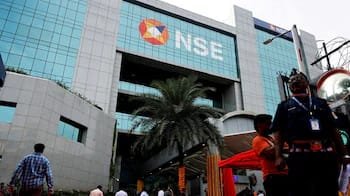
NSE Files UDRHP; PSU Insurers Cut Stake Sale, Reduce IPO Issue Size
NSE IPO Update: The National Stock Exchange of India (NSE) has submitted its updated draft red herring prospectus (UDRHP) with the Securities and Exchange Board of India (SEBI), another milestone in its long-awaited public listing.
Sources with knowledge of the development said the proposed size for the IPO is now likely to be about ₹23,000 crore, down from the roughly ₹30,000 crore offering initially envisioned in the original draft red herring prospectus (DRHP) filed earlier this year. Other estimates have pegged the potential issue size at about ₹23,500 crore, depending on the final offer structure and pricing.
NSE IPO to remain as Offer for Sale
The NSE IPO will continue to be structured as a full Offer for Sale (OFS). This means the existing shareholders will be selling their shares to the public investors and NSE itself will not get any proceeds from the issue.
The DRHP originally proposed to sell about 14.89 crore shares, or about 6% of the equity of NSE. The revised offering is expected to be smaller because some existing shareholders have proposed to sell fewer shares.
For related financial planning information, readers can also check the September 2026 Bank Holidays calendar.
PSU Insurers Scale Back Offerings
Public-sector insurance companies are among the shareholders that have cut the size of their proposed stake sales.
As per the original DRHP, General Insurance Corporation of India (GIC Re) had planned to sell up to around 1.066 crore shares while New India Assurance had proposed to offload around 1.05 crore shares.
National Insurance Company and United India Insurance Company had each made an offer for sale of about 60 lakh shares.
At first, the four PSU insurers had planned to sell about 3.37 crore NSE shares through the OFS. Later reports said their proposed sales had been slashed.
MS Strategic (Mauritius) Ltd, linked to Morgan Stanley, is also understood to have cut the number of shares it plans to sell. Its initial DRHP allocation was about 1.60 crore shares.
Smaller IPO, but Strong Institutional Interest
The cut in the offer size comes even as investor interest in the NSE listing is buoyant.
Sources cited in the report said the institutional book has attracted interest of around ₹85,000 crore, indicating strong demand from large investors even as the planned offer size is being trimmed.
The NSE IPO has attracted a lot of eyeballs as the exchange has been planning for a public listing for nearly a decade now.
NSE IPO Price Range and Valuation
The exchange is considering a price band of ₹1,700-₹1,785 per share, below the earlier expected range of ₹2,000-₹2,100, recent reports said.
The IPO could raise about ₹23,000-₹23,500 crore at the revised price and reduced offer size. The final size of the issue and pricing however will be subject to the final offering documents of the company and subsequent regulatory and market developments.
LIC Will Not Take Part in the OFS
The Life Insurance Corporation of India (LIC), the biggest stakeholder in NSE, is not participating in the proposed OFS.
LIC holds around 10.72% in NSE as per the company’s IPO documents. Other selling shareholders include State Bank of India, MS Strategic, Canada Pension Plan Investment Board, Aranda Investments, Bank of Baroda, Stock Holding Corporation of India and participating PSU insurers.
NSE IPO Significance
The NSE listing is one of the most awaited events in the Indian capital markets. The exchange is India’s largest by trading volume and has become a fundamental component of the country’s financial-market infrastructure.
The proposed IPO comes at a time when the Indian capital markets are undergoing major changes, especially in the derivatives segment and facing increased regulatory scrutiny.
Thus, the public listing of NSE could give investors a direct opportunity to own a piece of one of India’s most important financial-market institutions.
What investors should look at next
Now investors will keep a close watch on the final IPO structure, price band, number of shares offered and timeline for the public issue.
Filing the UDRHP is a big step, but investors are urged to wait for final offer documents and official disclosures before taking any investment decision.
NSE IPO: Key Takeaways at a Glance
| Details | Particular |
|---|---|
| Company | National Stock Exchange of India(NSE) |
| IPO Type | Offer for Sale (OFS) |
| Revised Anticipated Size | Around ₹23,000-₹23,500 cr |
| Expected Size Earlier | About ₹30,000 crore |
| Shares on Offer | Approximately 14.89 crore |
| Original Stake Offered | About 6% |
| Price Band Expected | ₹1,700–₹1,785 per share |
| NSE IPO Proceeds | No |
| UDRHP Filed With | SEBI |
| LIC Participation | No |
Frequently Asked Questions
1. What is the size of NSE IPO?
The revised NSE IPO valuation is in the region of ₹23,000-₹23,500 crore against the initial ₹30,000 crore-plus offering contemplated.
2. Will NSE get money from the IPO?
No. The proposed IPO is a pure Offer For Sale (OFS). Existing shareholders will sell their shares and NSE will not receive any proceeds from the IPO.
3. Why was the size of the NSE IPO reduced?
Several existing shareholders, including PSU insurance companies and Morgan Stanley-linked MS Strategic, have reduced the number of shares they plan to sell, said the sources.
4. Is LIC selling its shares in the NSE in the IPO?
No. LIC, which is the largest shareholder in NSE with about 10.72% stake, will not be participating in the proposed OFS.
5. When is the NSE IPO launch?
The exact timing of the IPO will depend on the regulatory process and the company’s final offer documents. Investors should refer to the official disclosures of NSE and SEBI for the dates.
Disclaimer: This article is solely for informational purposes and should not be construed as investment advice. Investors are advised to conduct their own research and consult a qualified financial adviser before investing.
Reported by NSE, SEBI and people familiar with the development.
